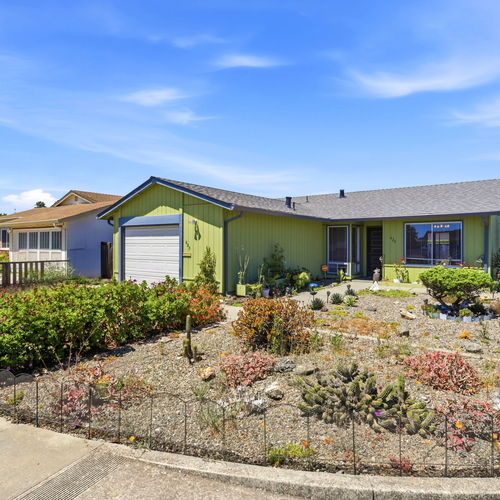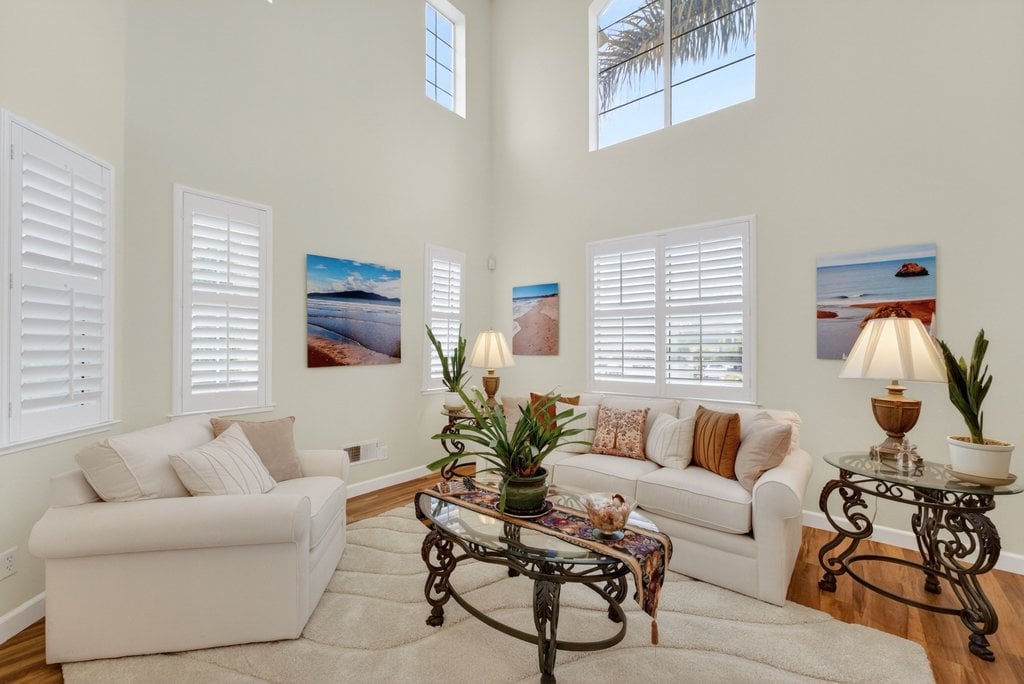
If you own a home in Santa Cruz County and have wondered what it's worth, you're not alone. Whether you're considering selling, refinancing, renovating, or simply tracking your equity, it's a common question. Online estimates can provide a starting point, but they rarely account for the local details that actually shape value here.
Santa Cruz County home values remain high overall, but pricing is highly local. A home in Capitola can command a very different price from a similar home in Scotts Valley or Boulder Creek, even with comparable square footage and bedrooms. Countywide medians provide context, but your specific neighborhood and street matter much more.
Two similar homes can sell for very different prices because buyers aren't simply purchasing square footage. They're buying location, lifestyle, convenience, usable space, condition, and the features that make one property stand out from another.
Here are seven factors that have an outsized influence on value.
1. Your Exact Location Matters Most
Santa Cruz County isn't one market. Values vary significantly between Santa Cruz, Capitola, Aptos, Soquel, Scotts Valley, Watsonville, and mountain communities such as Boulder Creek and Ben Lomond.
Buyers are choosing a lifestyle as much as a house: beach access, redwood surroundings, walkability, schools, privacy, or an easier Highway 17 commute. A three-bedroom in Capitola may attract buyers prioritizing coastal access, while a similar home in Scotts Valley may appeal more to families and Silicon Valley commuters. Boulder Creek attracts buyers looking for space, privacy, and a slower pace.
That's why ZIP codes and countywide averages can be misleading. Neighborhood, amenities, commute patterns, and even the feel of the street can affect what buyers are willing to pay.
2. Beach Access and Coastal Lifestyle Can Add a Premium
For many Santa Cruz County buyers, coastal property represents more than proximity to the water. It's about surfing, walking to coffee, enjoying evening beach walks, and having a distinctly coastal lifestyle.
But not all coastal locations are valued equally. Being near the beach, having an ocean view, and owning a bluff-adjacent or waterfront property are different categories, each attracting different levels of demand.
Areas such as Pleasure Point, Capitola, Westside Santa Cruz, Seabright, and coastal Aptos can attract buyers willing to pay more for location. A smaller cottage within walking distance of Capitola Village may compete successfully against a larger inland home because buyers are paying for lifestyle and access, not just square footage.
For homeowners in these areas, the address itself can be one of the property's strongest assets.
3. Schools and Commute Convenience Strengthen Demand
School boundaries can significantly affect the size of a home's buyer pool. Families often narrow their search to specific districts before considering individual properties.
Scotts Valley illustrates how school demand and commute access can work together. The Scotts Valley Unified School District attracts families, while proximity to Highway 17 makes the area practical for Silicon Valley commuters. Those factors can support demand even when a home itself isn't highly updated.
Buyers are paying for daily convenience as well as the house. A shorter commute, desired schools, and a neighborhood that fits their routine can outweigh cosmetic differences between properties.
4. Usable Outdoor Space Matters More Than Lot Size
A large lot isn't necessarily a valuable lot. Santa Cruz County's varied terrain means slope, drainage, access, sunlight, and usability can matter more than acreage.
Buyers want outdoor space they can actually use: a flat yard, entertaining area, garden space, parking, privacy, or potential for an ADU. A modest lot with a level backyard may be more appealing than a much larger mountain parcel where most of the land is steep or difficult to access.
ADU potential makes usability particularly relevant. A flat lot with appropriate setbacks and utility access can offer opportunities that a larger but constrained parcel cannot.
When evaluating your property, think beyond the assessor's lot size. Privacy, natural light, level ground, and practical access all influence how buyers perceive outdoor value.
5. Condition and Smart Updates Build Confidence
Santa Cruz homes face different maintenance concerns depending on location. Coastal properties can experience salt-air wear, while mountain homes may raise questions about septic systems, road access, and defensible space.
Buyers tend to feel more confident when major systems are in good condition. A sound roof, updated electrical, functioning HVAC, and no obvious moisture problems can reduce perceived risk and make buyers more comfortable moving forward.
Not every renovation provides the same return. A beautiful kitchen won't necessarily compensate for an aging roof or drainage problems. A less glamorous home with solid systems and little deferred maintenance can sometimes attract stronger offers because buyers see fewer expensive surprises ahead.
Before spending heavily on cosmetic improvements, consider whether the home's structural and mechanical condition needs attention first.
6. Views, Privacy, and Setting Can Separate Comparable Homes
Some important value drivers don't appear neatly in a spreadsheet. Ocean or bay views, redwood surroundings, natural light, privacy, quiet streets, and indoor-outdoor flow can create meaningful differences between otherwise comparable properties.
Two homes with identical floor plans can compete at very different prices if one is on a busy street while the other overlooks open space or has a view.
Appraisals attempt to account for features such as views and privacy, but buyer demand can be difficult to quantify precisely. A property offering something genuinely difficult to find may attract buyers specifically searching for that feature and willing to pay accordingly.
If your home has a standout setting, understand that it may be one of its most important selling points.
7. Inventory Can Change Pricing Quickly
Supply and demand affect pricing differently from neighborhood to neighborhood. When buyers have fewer comparable homes to choose from, competition can support stronger pricing. When several similar properties are available, buyers have more negotiating power.
Countywide statistics can hide those differences. Some homes receive multiple offers quickly, while others sit longer and require price adjustments. Much depends on the competition buyers see at the time your property comes to market.
That's why active, pending, and recently sold homes in your immediate area can be more informative than broad countywide reports. Comparable properties within roughly a half-mile that sold recently can provide a much clearer picture of what buyers in your specific neighborhood are paying.
Conclusion
Santa Cruz County home values are shaped by far more than square footage or a countywide median. Micro-location, coastal access, schools and commute convenience, usable outdoor space, condition, views and privacy, and current inventory all influence what buyers will pay for a specific property.
Looking at your home through this local lens before requesting a valuation or investing in improvements can help you understand which features are working in your favor and where there may be opportunities to strengthen your position.
The better you understand your property's place in the local market, the more realistic your expectations—and the more informed your next decision—can be.
Thinking About Selling?
Contact us for a confidential, no-obligation conversation about selling your Santa Cruz County home.Check out this article next